Soviet cinema: from "Battleship Potemkin" to "The Irony of Fate"
Gaidai and Ryazanov comedies, Tarkovsky's philosophical films, three Oscars and "Moscow Does Not Believe in Tears." How Soviet cinema became beloved by several generations.
"The most important of the arts"
Lenin is credited with the words: "Of all the arts, for us cinema is the most important." The USSR did indeed take film very seriously — as an art and at the same time as a means of education and ideology. Cinema was state-run: the studios, the scripts and distribution were all controlled by the authorities.
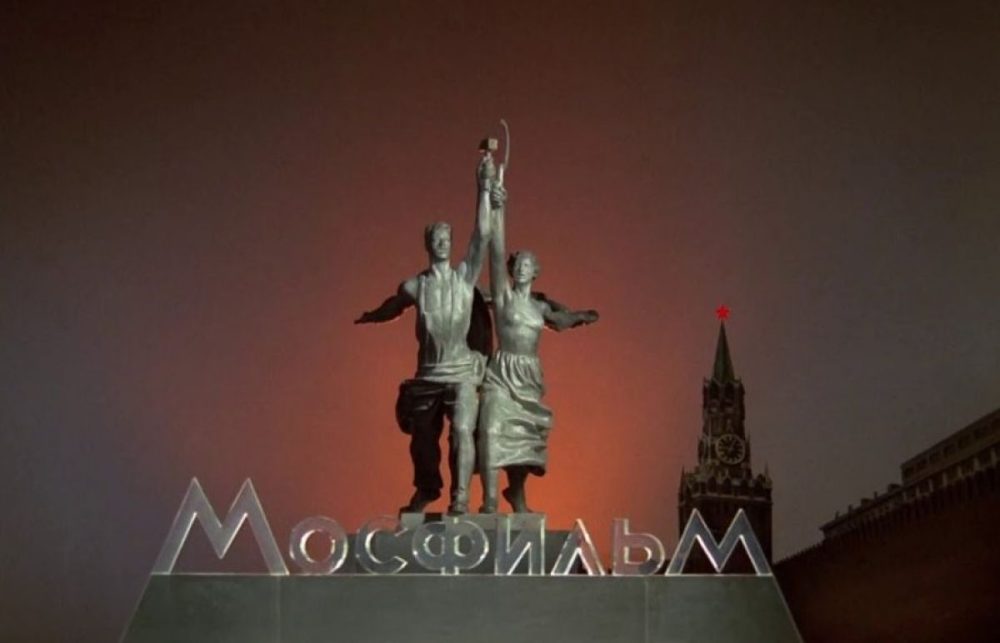
The country's main studio was Mosfilm, founded in 1924 — one of the largest film studios in Europe. Over its history it produced more than 2,500 films, and its logo, with the "Worker and Kolkhoz Woman" statue and a Kremlin tower, is recognized by everyone.
From the revolutionary avant-garde
Soviet cinema made its name as early as the 1920s. The director Sergei Eisenstein made "Battleship Potemkin" (1925) — a silent film about a sailors' mutiny whose scene on the Odessa Steps became one of the most famous and imitated in the history of film. The early Soviet innovators influenced cinema worldwide.
The "Thaw" and international recognition
After Stalin's death, during the years of the "Thaw," cinema became livelier and more human. The film "The Cranes Are Flying" (1957) won the top prize at the Cannes Film Festival — the Palme d'Or.
Three Soviet films won the Academy Award for Best Foreign Language Film:
- "War and Peace" by Sergei Bondarchuk — a grand adaptation of Tolstoy and the most expensive Soviet film;
- "Dersu Uzala" (1975) — a co-production with Japan by Akira Kurosawa;
- "Moscow Does Not Believe in Tears" (1980) — more on which below.
Comedies that are still watched today
A special source of pride is the Soviet comedies, which are rewatched to this day.
Leonid Gaidai made "Operation Y," "Kidnapping, Caucasian Style," "The Diamond Arm" and "Ivan Vasilievich Changes Profession" — with characters everyone loves and lines that became catchphrases. Eldar Ryazanov gave us "Beware of the Car," "Office Romance" and, of course, "The Irony of Fate" — a film watched in Russia every New Year. Its plot is a gentle mockery of standardized Soviet apartment blocks: the hero flies to another city by mistake, and his key fits an identical flat in an identical building.
Auteur cinema: Tarkovsky
There was serious, philosophical cinema too. Andrei Tarkovsky was a world-class director; his "Solaris," "Stalker," "Andrei Rublev" and "Mirror" are still studied in film schools around the world for their distinctive, slow and poetic film language.
"Moscow Does Not Believe in Tears"
The symbol of Soviet cinema's popular success is the melodrama "Moscow Does Not Believe in Tears" (1980) by Vladimir Menshov. More than 90 million viewers saw its story of three provincial women who come to conquer Moscow. In 1981 the film won the Oscar, and in polls it has repeatedly been named the best Soviet film. It is said that US President Ronald Reagan watched it several times before meeting Gorbachev — to understand the "mysterious Russian soul."
Legacy
Soviet cinema is loved by several generations. Today Mosfilm has put more than a thousand restored films online for free (many with subtitles), and they are easy to find and watch. The classic comedies and dramas never leave the screen and remain part of a shared memory.
Frequently asked questions
Which Soviet films won an Oscar? Three: "War and Peace," "Dersu Uzala" and "Moscow Does Not Believe in Tears."
What film is watched on New Year's Eve? "The Irony of Fate" by Eldar Ryazanov — it is a New Year tradition.
Where can Soviet films be watched? Mosfilm has put more than a thousand of its films online for free, many with subtitles.
Related
- Soyuzmultfilm: Soviet cartoons — the other side of the Soviet screen, the one children grew up on.
- Khrushchyovki: how the country got its own flats — the very standardized housing that "The Irony of Fate" pokes fun at.
- The Cold War: half a century of confrontation — the era in which even films became a "bridge" between the USSR and the West.
- The Soviet poster — the Stenberg brothers' film bills as an art of their own.
Sources
The facts in this article can be verified against these sources:
- Wikipedia, "Mosfilm": https://en.wikipedia.org/wiki/Mosfilm
- Wikipedia, "Moscow Does Not Believe in Tears": https://en.wikipedia.org/wiki/Moscow_Does_Not_Believe_in_Tears
- Seventeen Moments in Soviet History (Michigan State University), "Moscow Doesn't Believe in Tears": https://soviethistory.msu.edu/1980/moscow-doesnt-believe-in-tears/
- Russia Beyond, "Top 30 movies by Mosfilm studio": https://www.gw2ru.com/arts/2708-mosfilm-main-movies
- Global Voices, "All of the Soviet Union's Academy Award-Winning Films Are Legally and Freely Available Online": https://globalvoices.org/2018/02/24/all-of-the-soviet-unions-academy-award-winning-films-are-legally-and-freely-available-online/