Joseph Stalin: industrialization, terror and victory in war
Stalin led the USSR for almost 30 years. Under him the country became a superpower and defeated Nazism — and under him came collectivization, famine and mass repression. A detailed, honest account.
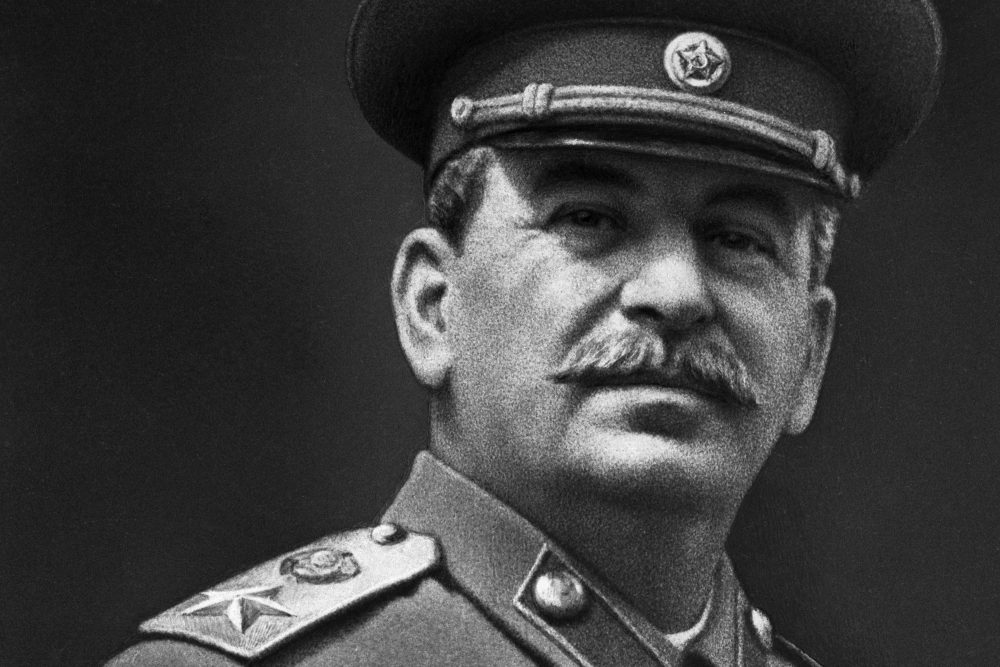
Who Stalin was
Joseph Stalin led the Soviet Union for almost three decades — from the mid-1920s until his death in 1953. In that time the country went from a ruined agrarian state to an industrial superpower that defeated Nazi Germany. And the same era contained forced collectivization, a terrible famine and mass repression that cost millions of lives.
This is why Stalin is one of the most significant and most contested figures of the 20th century. He cannot be understood by taking only one side: both the achievements and the crimes here are real and enormous.
From Georgia to the summit of power
Stalin's real name was Ioseb Dzhugashvili. He was born in 1878 in the town of Gori in Georgia, into a poor family. He studied at a theological seminary but did not finish it and became a professional Bolshevik revolutionary. He took the pseudonym "Stalin" — from the word for "steel" — in those years.
From 1922 Stalin held the post of General Secretary of the party — not yet the top office, but one that gave him control over personnel. After Lenin's death in 1924 a struggle for power unfolded, and Stalin emerged the victor, pushing aside his rivals one after another — Trotsky, Zinoviev, Kamenev and later Bukharin. By the end of the 1920s he had become the country's sole ruler.
The "Great Turn": industrialization
From 1928 Stalin scrapped the relatively free economy of the 1920s and launched the Five-Year Plans — forced industrialization under a single state plan. Within a few years the USSR built thousands of factories and power stations and whole new cities; the country was transformed from a largely peasant one into an industrial and military power.
This achievement is often credited to Stalin — and it was precisely the industry built then that later played a key role in the war. But the surge came at an enormous cost: brutal working conditions, the forced labour of the camps, and harsh economizing on everything "secondary" — housing, goods, the very living standards of ordinary people.
Collectivization and famine
Alongside industrialization came the forced collectivization of the countryside: millions of peasant households were driven into collective farms. The better-off peasants — the "kulaks" — were "liquidated as a class": about a million families had their property confiscated and were arrested, sent to camps or exiled to remote regions. The peasants resisted and slaughtered their livestock; agriculture was gutted.
The result was the catastrophic famine of 1932–1933. By various estimates it claimed between 5.5 and 7 million lives across the USSR. Ukraine, Kazakhstan and southern Russia were hit hardest. In Ukraine this famine is known as the Holodomor; the most detailed demographic studies put the death toll there at about 3.9 million (estimates range from 3.5 to 7 million). At the height of the famine the state kept extracting grain, and special directives effectively sealed the borders of the starving regions, preventing people from leaving.
Here honesty on a contested question matters. Historians agree that the famine was man-made — caused by the policies of collectivization and grain seizure, not simply by a poor harvest. But they disagree on something else: whether it was deliberate, whether it was directed specifically at Ukrainians, and whether it can be considered genocide. The main point of contention is the absence of a document explicitly ordering people to be starved. Ukraine and many countries officially recognize the Holodomor as a genocide; some historians see it rather as a monstrous consequence of policy than as a planned destruction of a people. We give both positions.
The Great Terror
In 1936–1938 came the Great Terror (the Great Purge). A wave of arrests, show trials and executions swept the country. According to official (archival) figures, in 1937–1938 alone about 680,000 people were shot on political charges; unofficial estimates for those two years range from 700,000 to more than a million.
The repression fell on everyone: on "old Bolsheviks" and yesterday's comrades, on Red Army commanders (which weakened it on the eve of the war), on engineers, scientists and writers, and on whole peoples (the so-called "national operations" of the NKVD). Denunciations, fear and the cult of the leader's personality became part of everyday life.
The Gulag
The symbol of the era was the camp system — the Gulag. During Stalin's rule about 18 million people passed through it. By archival figures, at least 1.5–1.7 million died in the camps — from executions, hunger, disease and brutal labour. Prisoners were used as cheap labour on projects like the White Sea–Baltic Canal.
People the country would later take pride in also passed through the Gulag. Among them was Sergei Korolev, the future chief designer of the space programme: the man who opened the road to space for humanity nearly perished in Stalin's camps himself.
The war
In 1939 the USSR signed a non-aggression pact with Nazi Germany. Despite this, in 1941 Germany invaded the Soviet Union, and the first blow caught the country off guard. Under Stalin's leadership the USSR held out and in 1945 defeated Nazism — at the cost of about 27 million lives. Victory in the Great Patriotic War is a central part of his legacy and of popular memory.
The war had a dark side too: in those years, on Stalin's orders, entire peoples (Chechens, Crimean Tatars, Volga Germans and others) were deported from their lands.
After the war and death
After the war Stalin established control over the countries of Eastern Europe — the Cold War began. The repression did not stop: in his final years new campaigns unfolded, including the "Doctors' Plot" with a clear antisemitic tinge.
Stalin died on 5 March 1953. As early as 1956, Nikita Khrushchev, in his famous "secret speech," denounced Stalin's crimes and the cult of his personality — "de-Stalinization" had begun.
How many people died
The exact number of the regime's victims is still contested, and estimates differ widely.
After the Soviet archives were opened, they were found to contain official records of about 800,000 executions (1921–1953), of 1.5–1.7 million deaths in the Gulag, of about 390,000 deaths during dekulakization, and of up to 400,000 among those deported. Separately, the famine of 1932–1933 claimed, by various estimates, between 5.5 and 7 million lives.
Older estimates of the total number of victims ran to 20 million and higher. There is no single accepted figure: today the most commonly cited range is about 6 to 9 million dead (based on archival data, including the famine), and higher with broader counts. We give a range rather than a single number.
A contested legacy
Assessments of Stalin diverge sharply — and we honestly show both sides.
- Most historians see him as one of the most brutal dictators in history: totalitarian power, mass repression and a man-made famine that killed millions.
- Others — and part of society in present-day Russia and Georgia — emphasize industrialization, the country's transformation into a superpower and the victory in the war; there is also nostalgia for a "strong hand," and attempts to present Stalin as an "effective manager."
We do not choose one verdict for the reader. But we also do not hide the main thing: behind the real achievements stood a system built on violence and fear, and millions of dead.
Frequently asked questions
How many people died under Stalin? There is no single figure. By archival data it runs to millions (executions, the Gulag, dekulakization and deportations, plus the famine of 1932–1933); the most commonly cited range is 6 to 9 million, with older estimates up to 20 million and higher.
Was the famine a genocide? Historians agree the famine was man-made. But whether it was deliberate and directed at Ukrainians is disputed. Ukraine and many countries recognize the Holodomor as genocide; some historians see it as a grievous consequence of policy rather than a planned destruction of a people.
What was the Gulag? The system of Soviet forced-labour camps. About 18 million people passed through it during Stalin's rule, and many died.
Why do some honour him and others curse him? Because his era combined the incompatible: industrialization and victory in the war — and collectivization, famine and terror. People place the emphasis differently.
Related
- The founding of the USSR (1922) — the state he came to lead and transform.
- Sergei Korolev: the Chief Designer — the designer who passed through Stalin's camps.
- Khrushchyovki: how the country got its own flats — a symbol of the "Thaw" that followed his era.
- The dissolution of the USSR (1991) — how the story of the Union he built came to an end.
- The Gulag: an archipelago of forced labor — the camp system that became part of his economy.
- The Great Patriotic War — the supreme test of his era: role and responsibility.
- The Battle of Stalingrad — the battle for the city that bore his name.
Sources
The facts in this article can be verified against authoritative sources:
- Encyclopædia Britannica, "Joseph Stalin": https://www.britannica.com/biography/Joseph-Stalin
- Encyclopædia Britannica, "Great Purge": https://www.britannica.com/event/Great-Purge
- HISTORY, "Joseph Stalin": https://www.history.com/articles/joseph-stalin
- Wikipedia, "Holodomor": https://en.wikipedia.org/wiki/Holodomor
- Wikipedia, "Excess mortality in the Soviet Union under Joseph Stalin": https://en.wikipedia.org/wiki/Excess_mortality_in_the_Soviet_Union_under_Joseph_Stalin
Where the data are contested (the number of victims, the assessment of his legacy, the term "genocide" for the Holodomor), we give ranges and different positions rather than a single one.