The founding of the USSR: 30 December 1922
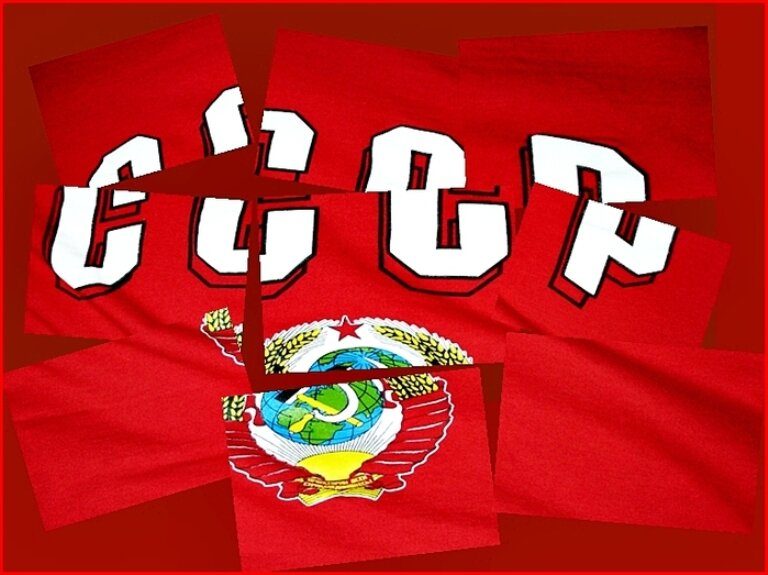
In late 1922 four Soviet republics united into a single state — the Union of Soviet Socialist Republics.
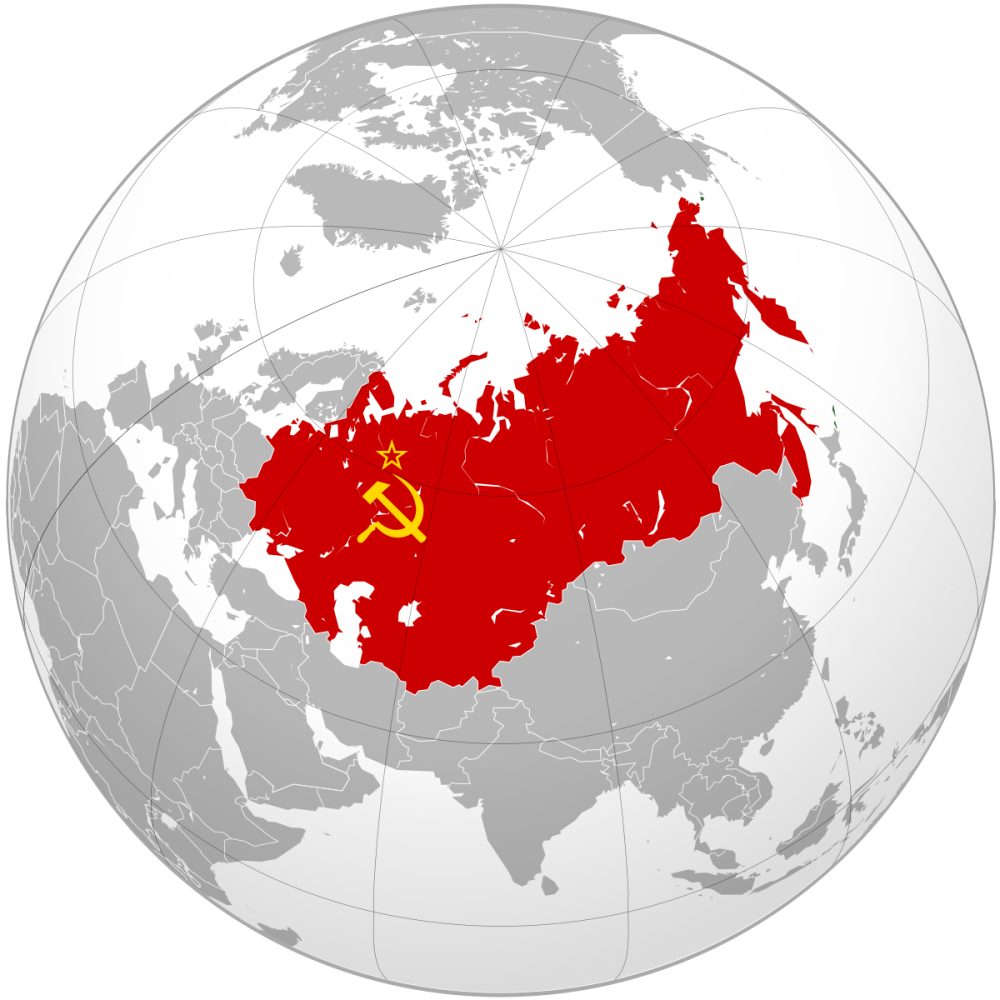
On 30 December 1922 four Soviet republics united into a single state — the Union of Soviet Socialist Republics. How it happened, who argued over the shape of the union, and why views on it still differ.
What happened on 30 December 1922
On 30 December 1922 the First Congress of Soviets of the USSR opened in Moscow, in the building of the Bolshoi Theatre. The delegates approved two documents — the Declaration and the Treaty on the Formation of the Union of Soviet Socialist Republics. A new state had appeared on the map of the world.
Four Soviet republics joined the Union:
- The Russian SFSR (RSFSR)
- The Ukrainian SSR
- The Byelorussian SSR
- The Transcaucasian SFSR — a federation of Georgia, Armenia and Azerbaijan, formed shortly before
On paper the republics were declared equal and sovereign, and the Union itself a voluntary association. The new system was finally fixed in the first Constitution of the USSR, adopted in 1924.
What came before: empire, revolution and war
The Union did not appear out of nowhere. It arose on the territory of the collapsed Russian Empire. In 1917 two revolutions overthrew first the monarchy and then the Provisional Government, and the Bolsheviks took power. There followed the Civil War (1918–1922) between supporters of the new order (the "Reds"), their opponents (the "Whites") and many national and regional forces.
By 1922 the Bolsheviks controlled most of the former empire. A practical question arose: how to bind together the formally independent Soviet republics — Russia, Ukraine, Belarus and the republics of the Transcaucasus — which were already closely tied by a shared army, economy and party. The answer was to create a single union state.
The argument over how to unite: "autonomization" versus a union
The real argument was not about whether to unite, but on what terms.
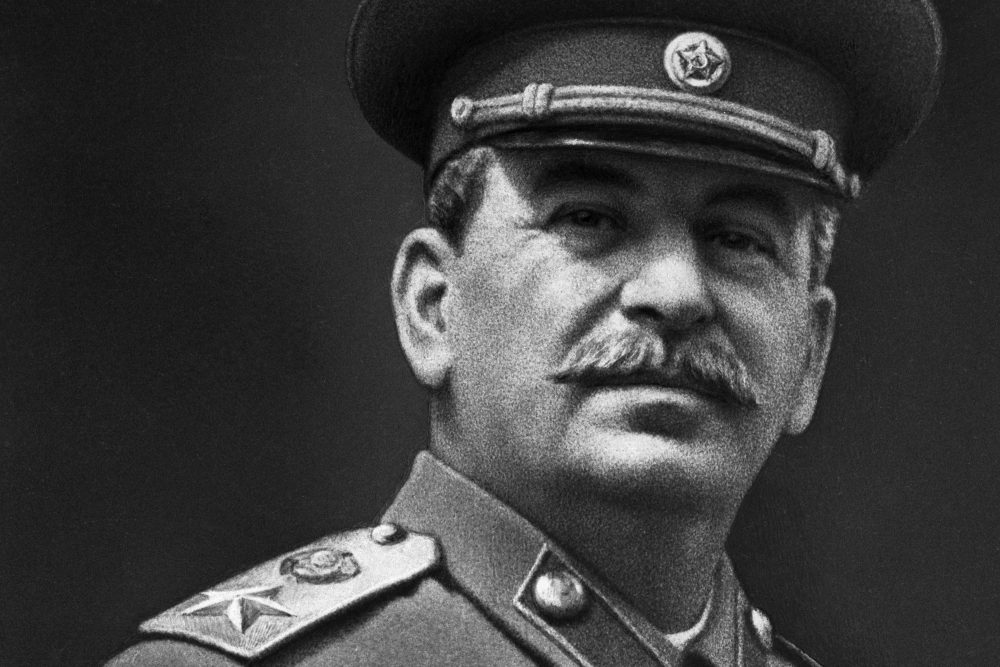
The People's Commissar for Nationalities, Joseph Stalin, proposed a plan of "autonomization": the other republics would enter the RSFSR as autonomous units — in effect, subordinate to Russia.
Vladimir Lenin opposed this. He believed such an approach would strengthen "Great-Russian chauvinism" and alienate other peoples. Lenin insisted on a union of formally equal republics, each with the right to freely leave the Union. In the end it was Lenin's version that prevailed — a union, not an annexation.
In those same weeks Lenin, already gravely ill after a stroke, dictated his notes "On the Question of Nationalities or 'Autonomization'", sharply criticizing the heavy-handedness of Stalin and Sergo Ordzhonikidze in the so-called "Georgian affair" — a conflict over how Georgia would enter the Union. Lenin could no longer shape policy in practice, and he died in January 1924.
Equal on paper, centralized in practice
Under the Treaty and the Constitution the republics counted as sovereign and even held a written right to leave the Union. But real power worked differently.
The country was run by a single Communist Party, organized along strictly centralized lines: decisions were taken at the top and were binding on everyone. So behind the façade of a "union of equal republics" stood a tightly centralized party-and-state apparatus. Historians point to this gap between form (a federation) and substance (centralization) as one of the defining features of the Soviet system.
The right to secede remained on paper and was never used until 1991 — when it became the very legal mechanism for the Union's dissolution.
A voluntary union, or a new gathering of the lands?
How to judge the formation of the USSR is a question on which views differ.
In the Soviet tradition it was presented as a voluntary union of free peoples, a "brotherly family of republics" joined together for a common future.
Many modern and Western historians take a more critical view. They point out that the union was preceded by the military establishment of Soviet power on the ground: the independent states that had emerged in 1918–1921 — the Ukrainian People's Republic, the Democratic Republic of Georgia and others — were defeated, with the Red Army playing its part. From this angle the "voluntariness" was in large part constrained, and the Union became a new way of gathering the lands of the former empire under the rule of a single party.
Both readings rest on real facts. Exactly where the line runs between a voluntary union and coercion is a long-standing debate, and this project shows the different points of view rather than a single "correct" one.
The 1924 Constitution and the growth of the Union
In January 1924 the first Constitution of the USSR was adopted, fixing the union structure, the common organs of power and the division of authority between the Union and the republics.
Over time the number of union republics grew. The Transcaucasian federation later split into separate republics, the Central Asian republics appeared, and by the middle of the 20th century the Union contained fifteen union republics. In this form the USSR lasted until December 1991.
Why it matters
The formation of the USSR is one of the key moments of 20th-century history.
- It produced the world's first socialist union state, which would last for almost seven decades.
- The Union's name was not tied to any particular country or territory: the idea was that new socialist republics could join it — a reflection of the contemporary dream of world revolution.
- The principle laid down in 1922 — a "union of republics with the right to leave" — became, almost 70 years later, the very mechanism through which the Union ceased to exist in 1991.
Related
- Joseph Stalin — who led and transformed the state created in 1922.
- Yuri Gagarin: the first human in space — one of the Union's greatest achievements.
- The dissolution of the USSR (1991) — how the Union's story ended.
- The hammer and sickle: the USSR's main symbol — the other half of the country's visual formula.
- The Soviet anthem: the melody that outlived its country — the audible half of the state canon.
Sources
The facts in this article can be verified against authoritative sources:
- Seventeen Moments in Soviet History (Michigan State University), "Union Treaty": https://soviethistory.msu.edu/1924-2/union-treaty/
- Library of Congress, In Custodia Legis blog, "Treaty on the Creation of the Soviet Union": https://blogs.loc.gov/law/2013/01/treaty-on-the-creation-of-the-soviet-union-signed-sealed-and-delivered/
- Presidential Library (Russia), "Declaration and Treaty on the Formation of the USSR were signed": https://www.prlib.ru/en/history/619858
- Wikipedia, "Treaty on the Creation of the Union of Soviet Socialist Republics": https://en.wikipedia.org/wiki/Treaty_on_the_Creation_of_the_Union_of_Soviet_Socialist_Republics
Where historians disagree (for example, on the form of the union — Stalin's "autonomization" plan versus a federation), we show the different positions rather than just one.