The Cuban Missile Crisis: thirteen days on the edge of nuclear war
In October 1962, Soviet missiles in Cuba brought the world closer to nuclear war than ever before. Thirteen days, a secret deal, and a man aboard a submarine who may have saved the planet.
Thirteen days on the edge
In October 1962 the world stood on the brink of nuclear war for thirteen days. The cause was Soviet nuclear missiles secretly deployed in Cuba — only a couple of hundred kilometres from the shores of the United States. It was the most dangerous moment of the Cold War, and perhaps of all human history.
The crisis is known by different names: in Russia it is the Caribbean Crisis, in the West the Cuban Missile Crisis, and in Cuba the October Crisis. All refer to the same confrontation between the US and the USSR in the autumn of 1962.
Why the missiles ended up in Cuba
To understand the crisis, we need to go back a little.
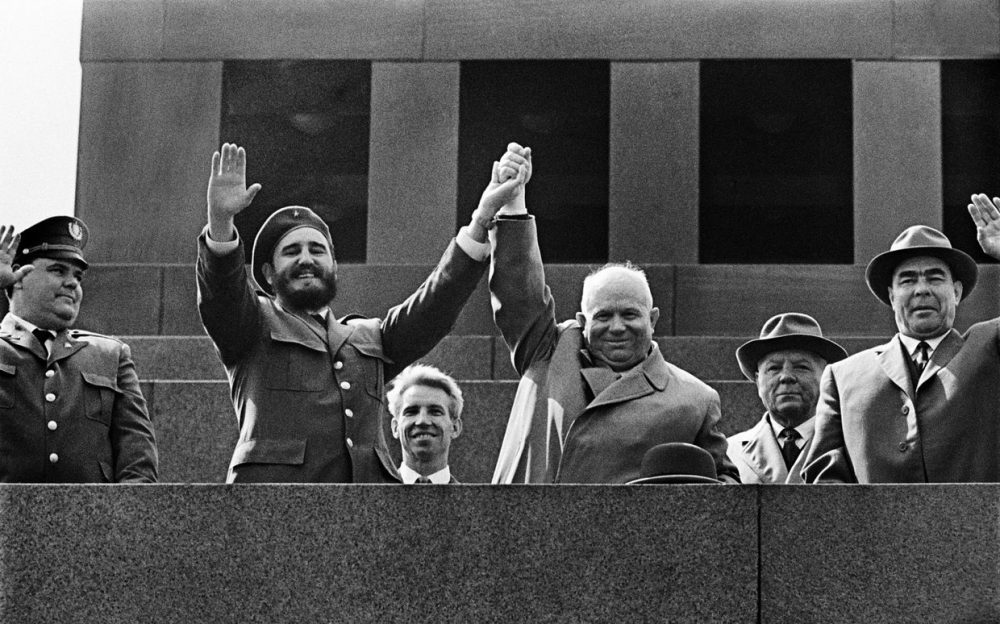
In 1959 Fidel Castro came to power in Cuba, and the island drew closer to the Soviet Union. In 1961 the US backed a failed landing by Castro's opponents at the Bay of Pigs — an attempt to overthrow him that collapsed. After that, Cuba genuinely feared a new American invasion.
There was a second reason too. By then the US had deployed its own "Jupiter" nuclear missiles in Turkey and Italy — right on the borders of the USSR. Soviet leader Nikita Khrushchev decided to respond in kind. In the summer of 1962 he secretly agreed with Castro to place Soviet nuclear missiles in Cuba — both to protect the island from invasion and to level the balance by creating a threat right off America's coast.
Discovery: the U-2 photographs
Through the summer and autumn of 1962, Soviet ships carrying military cargo were sailing to Cuba. US intelligence noticed, and President John Kennedy publicly warned that there must be no offensive weapons on the island.
But on 14 October 1962 an American U-2 spy plane photographed what changed everything: launch sites for medium-range ballistic missiles were under construction in Cuba. Such missiles could reach much of the territory of the United States. The photographs were placed on Kennedy's desk, and the thirteen most tense days of the Cold War began.
What to do?
Kennedy gathered his closest advisers — the group that went down in history as the "Executive Committee." They weighed the options for a response.
- An airstrike and invasion. The military favoured this: bomb the missile sites and then land on Cuba.
- Diplomacy. Warnings, negotiations, an appeal to the UN.
- A naval blockade. Stop new military cargo from reaching Cuba and force the USSR to remove the missiles.
Kennedy chose a middle course — a blockade. But the word "blockade" carried a dangerous legal meaning: it was effectively an act of war. So it was called a "quarantine" — which both avoided a formal declaration of war and won the support of other countries in the Americas.
The quarantine
On 22 October 1962 Kennedy appeared on television and told the nation and the world about the missiles in Cuba. He announced the "quarantine" and demanded that the missiles be removed and the sites destroyed.
A tense, frightening stalemate began. No one knew how Khrushchev would act. Soviet ships headed toward the quarantine line; some of them eventually turned back, and vessels without weapons were let through by the US Navy. Khrushchev took the "quarantine" as an ultimatum and called the US action a violation of international law. And Castro, convinced an invasion was imminent, urged Moscow to launch a pre-emptive nuclear strike on the US. The tension mounted by the hour.
Black Saturday
The peak came on 27 October 1962 — a day that became known as "Black Saturday."
On that day an American U-2 spy plane was shot down over Cuba; its pilot, Major Rudolf Anderson, was killed. It was the only combat death of the entire crisis — and at that moment it seemed it might be the first of millions.
At the same time, letters were being exchanged. The day before, on 26 October, Khrushchev had sent Kennedy an emotional message: he offered to remove the missiles in exchange for a US promise not to invade Cuba. But the next day a second, tougher letter arrived — now Moscow also demanded the removal of the American "Jupiter" missiles from Turkey. The world hung by a thread.
The submarine B-59
The most terrifying event of that day took place where no one could see it — underwater.
Off the coast of Cuba, American ships detected the Soviet submarine B-59 and, to force it to surface, began dropping practice depth charges. The crew did not know these were only a signal: the submarine had been out of contact with Moscow for days, was running deep, its batteries were failing and its air conditioning had broken down, leaving searing heat inside. The men did not know whether war had already begun.
Few on the American side suspected that B-59 carried a nuclear torpedo — roughly as powerful as the bomb dropped on Hiroshima. By the accounts of those aboard, the exhausted captain decided that war might already be under way and was ready to use the weapon. But on this submarine — unlike others — a launch required the agreement of three senior officers. One of them, Vasili Arkhipov, refused. He persuaded the captain to surface and request orders from Moscow.
This episode was later called one of the most dangerous moments of the crisis, and Arkhipov's decision one of the things that helped prevent nuclear war. Historians dispute some of the details, but the core is accepted: a single "no" in a searing steel hull may have saved millions of lives.
The secret deal and the resolution
The resolution came not from the battlefield but from secret talks. On the evening of 27 October the president's brother, Robert Kennedy, met secretly with the Soviet ambassador Anatoly Dobrynin. The two sides found a way out:
- the USSR would remove the missiles from Cuba under UN supervision;
- the US would publicly promise not to invade Cuba;
- and — by a secret understanding — the US would later remove its "Jupiter" missiles from Turkey.
On the morning of 28 October 1962 Khrushchev announced by radio that the Soviet missiles would be dismantled and taken away. The crisis was over.
How it ended
The quarantine was lifted only on 20 November 1962, once the Soviet bombers had also been withdrawn from Cuba. The American missiles were removed from Turkey in April 1963 — as had been secretly promised. The world learned of the secret part of the deal only about a quarter of a century later.
The crisis taught both sides a great deal. A direct "hotline" was established between Moscow and Washington (1963), and soon afterward a treaty was signed banning nuclear tests in three environments. Both leaders had seen clearly just how close they had come to catastrophe.
Who won?
In public it looked like a Kennedy victory: the Soviet missiles were removed, and the USSR appeared to have "backed down." But it is more complicated. The US also made a concession — it secretly removed its missiles from Turkey and promised to leave Cuba alone. That is why many historians see the crisis not as a victory for one side but as a mutual compromise, one that both leaders accepted after looking into the abyss. We show both readings.
Frequently asked questions
Why is it called the Caribbean Crisis? After the region — the Caribbean Sea, where Cuba lies. In the West it is more often called the "Cuban Missile Crisis," and in Cuba itself the "October Crisis."
How close was nuclear war? Very close — closer than at any other moment of the Cold War. Especially dangerous were "Black Saturday," 27 October, and the incident with the submarine B-59.
How did it end? The USSR removed the missiles from Cuba; the US promised not to invade the island and secretly removed its missiles from Turkey.
Who backed down? Formally, the USSR. But in fact both sides made concessions — one of the concessions was simply kept secret.
Related
- The Cold War: half a century of confrontation — the wider context in which the crisis flared up.
- Sputnik 1: the start of the space age — the source of America's fear that Soviet missiles could reach it.
- The dissolution of the USSR (1991) — how the confrontation finally ended.
Sources
The facts in this article can be verified against authoritative sources:
- John F. Kennedy Presidential Library, "Cuban Missile Crisis": https://www.jfklibrary.org/learn/about-jfk/jfk-in-history/cuban-missile-crisis
- Office of the Historian (US State Department), "The Cuban Missile Crisis, October 1962": https://history.state.gov/milestones/1961-1968/cuban-missile-crisis
- US National Archives, "The Cuban Missile Crisis": https://www.archives.gov/publications/prologue/2002/fall/cuban-missiles.html
- National Security Archive (GWU), "The Underwater Cuban Missile Crisis at 60": https://nsarchive.gwu.edu/briefing-book/russia-programs/2022-10-03/soviet-submarines-nuclear-torpedoes-cuban-missile-crisis
- Wikipedia, "Cuban Missile Crisis": https://en.wikipedia.org/wiki/Cuban_Missile_Crisis
Where the data are contested (who "won," the details of the B-59 incident), we give different positions rather than a single one.