Valentina Tereshkova: the first woman in space
On 16 June 1963 Valentina Tereshkova, aboard Vostok 6, became the first woman in space. A former factory worker and skydiver — and still the only woman to have flown a solo mission.
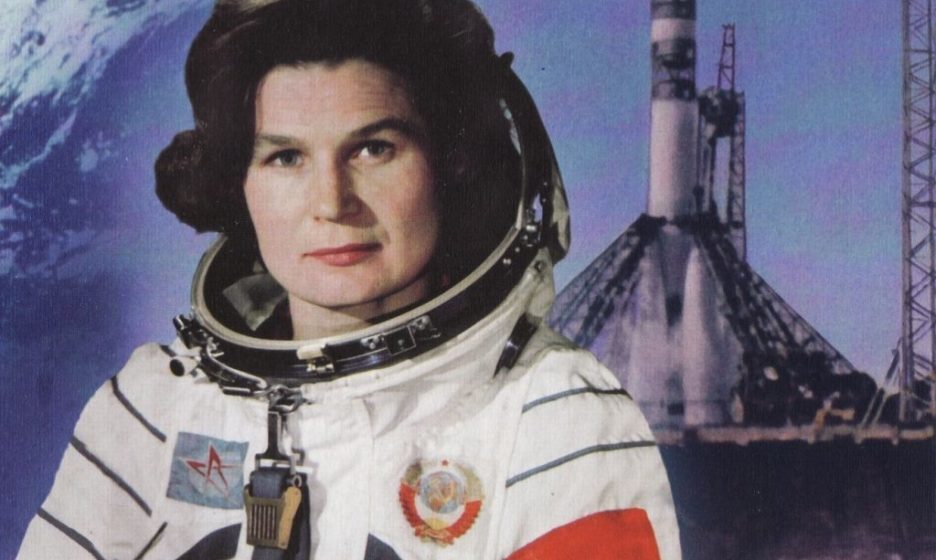
The first woman in space
On 16 June 1963 the spacecraft Vostok 6 lifted off from the Baikonur Cosmodrome. On board was the 26-year-old Valentina Tereshkova — the first woman in space. Her call sign was "Chaika" ("Seagull").
The flight lasted almost three days (about 71 hours), during which Vostok 6 completed 48 orbits of the Earth. To this day Tereshkova remains the only woman to have flown a solo space mission.
Who she was
Valentina Vladimirovna Tereshkova was born on 6 March 1937 in the village of Maslennikovo in the Yaroslavl region, into a peasant family. Her father was a tractor driver who was killed in the Soviet–Finnish War. Valentina herself worked at a textile mill.
Her great passion was parachuting: at a local flying club she made more than a hundred jumps. That skill proved decisive — for Vostok cosmonauts landed separately from the craft, by parachute.
How she was chosen
After Gagarin's flight, the leadership decided that the first woman in space simply had to be a Soviet citizen. In 1962, out of more than 400 applicants, five female parachutists were selected and began training for a flight.
Tereshkova was chosen not only for her preparation. Her background mattered too: the daughter of an ordinary tractor driver and a factory worker, she was an ideal image for the country. Nikita Khrushchev was pleased with the propaganda value of the choice. One of the training chiefs called her "Gagarin in a skirt."
The flight
Vostok 6 did not fly alone: two days earlier Vostok 5 had launched with cosmonaut Valery Bykovsky. The two craft came within about 5 kilometres of each other, and Tereshkova and Bykovsky were able to talk. Her image was broadcast on Soviet television, and she spoke by radio with Khrushchev.
As on all Vostok flights, control was automated — Tereshkova kept a flight log, made observations and took photographs. Her pictures of the horizon later helped scientists study layers of the atmosphere. The flight was not easy: she admitted to feeling unwell. But she completed her task.
On 19 June, as planned, she ejected during the descent and landed by parachute — in the Altai region. In a single flight she had spent more time in space than all American astronauts combined up to that point.
What came next
The flight made Tereshkova a worldwide celebrity. She was named a Hero of the Soviet Union and travelled widely as a goodwill ambassador. In November 1963 she married cosmonaut Andriyan Nikolayev; their daughter was the first child whose parents had both been to space.
A curious fact: after Tereshkova, the next Soviet woman did not fly into space for another 19 years — Svetlana Savitskaya, in 1982.
Why it matters
- For the first time a woman had reached space — a powerful scientific and symbolic breakthrough.
- The USSR again beat the United States: the American Sally Ride would not fly into space until 20 years later, in 1983.
- Tereshkova proved that a woman could withstand the demands of spaceflight, and became a symbol for many generations.
Related
- Yuri Gagarin: the first human in space — the first human in space, whose path she followed.
- Sputnik 1: the start of the space age — where the space age began.
- Sergei Korolev: the Chief Designer — the chief designer of her spacecraft.
Sources
The facts in this article can be verified against authoritative sources:
- NASA StarChild, "Valentina Tereshkova": https://starchild.gsfc.nasa.gov/docs/StarChild/whos_who_level2/tereshkova.html
- Encyclopædia Britannica, "Valentina Tereshkova": https://www.britannica.com/biography/Valentina-Tereshkova
- European Space Agency (ESA), "First woman in space: Valentina": https://www.esa.int/About_Us/50_years_of_ESA/50_years_of_humans_in_space/First_woman_in_space_Valentina
- Smithsonian National Air and Space Museum, "Reaching New Heights in Space": https://airandspace.si.edu/stories/editorial/reaching-new-heights-space