Vladimir Lenin: the man who created the Soviet state
Founder of the Bolshevik Party, leader of the 1917 revolution and first head of the Soviet state. A full and honest account of the life, deeds and contested legacy of Vladimir Lenin.
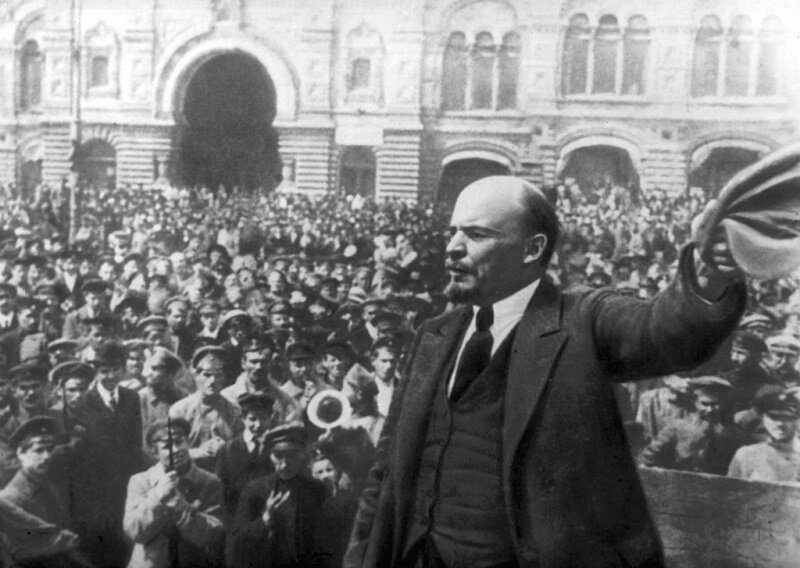
The man who created the USSR
Vladimir Lenin was the founder of the Bolshevik Party, the leader of the October Revolution of 1917 and the first head of the Soviet state. He created the world's first country to declare itself socialist and laid the foundations of a political system that lasted almost 70 years.
Lenin is one of the most influential and, at the same time, most contested figures of the 20th century. Some see him as a great revolutionary, liberator and thinker; others as the creator of a one-party dictatorship and a repressive apparatus. To understand him, one has to look at both sides: what he built, and at what cost.
Childhood and a brother's execution
Lenin's real name was Vladimir Ilyich Ulyanov. He was born on 22 April 1870 in Simbirsk (a town later renamed Ulyanovsk in his honour). His family was educated and comfortable: his father rose to become an inspector of public schools, and learning was valued at home. Young Vladimir was a gifted child and finished secondary school first in his class.
A tragedy proved to be a turning point: in 1887 Lenin's older brother, Aleksandr, was executed for taking part in a plot to assassinate Tsar Alexander III. It shook the family and pushed the young Vladimir towards revolutionary ideas. That same year he was expelled from Kazan University for taking part in student unrest. He later earned a law degree all the same — and threw himself into the study of Karl Marx.
A professional revolutionary
In 1893 Ulyanov moved to St. Petersburg and became a prominent Marxist. For his revolutionary activity he was arrested and, in 1897, exiled to Siberia, to the village of Shushenskoye, for three years. In exile he married Nadezhda Krupskaya — she became his comrade, secretary and one of the party's organizers.
He adopted the pseudonym "Lenin" around 1901. For almost two decades before the revolution Lenin lived in emigration, moving around Europe — Munich, London, Geneva, Paris, Zurich. He published the illegal newspaper Iskra ("The Spark"), wrote theoretical works and built a party of a new type — small, disciplined, made up of "professional revolutionaries."
Bolsheviks and Mensheviks
In 1903 the Russian Social Democratic party split. Lenin's supporters, who had gained the upper hand in a vote, came to be called Bolsheviks ("the majority"), and their opponents, led by Martov, the Mensheviks. Lenin insisted on a tightly organized party that would lead the working class to power.
In his writings Lenin developed Marx's ideas. In "Imperialism, the Highest Stage of Capitalism" (1916) he explained the world war as a product of the nature of capitalism. In the pamphlet "The State and Revolution" he argued for the necessity of a "dictatorship of the proletariat" — direct rule by the workers, which over time was to "wither away" along with the state itself.
1917: return and revolution
In February 1917 a revolution took place in Russia: Tsar Nicholas II abdicated, and power passed to a Provisional Government. Lenin was in emigration in Switzerland at the time. He returned to Russia in April 1917 — through German territory, in a "sealed train" (Germany, at war with Russia, hoped Lenin would destabilize it from within).
At home Lenin rejected the Provisional Government and put forward simple, powerful slogans: "Peace, land, and bread!" and "All power to the Soviets!" In the summer, after a failed uprising in the capital, he had to flee to Finland again. But in the autumn, when the Provisional Government had lost the support of a people worn out by war, Lenin insisted on an armed uprising.
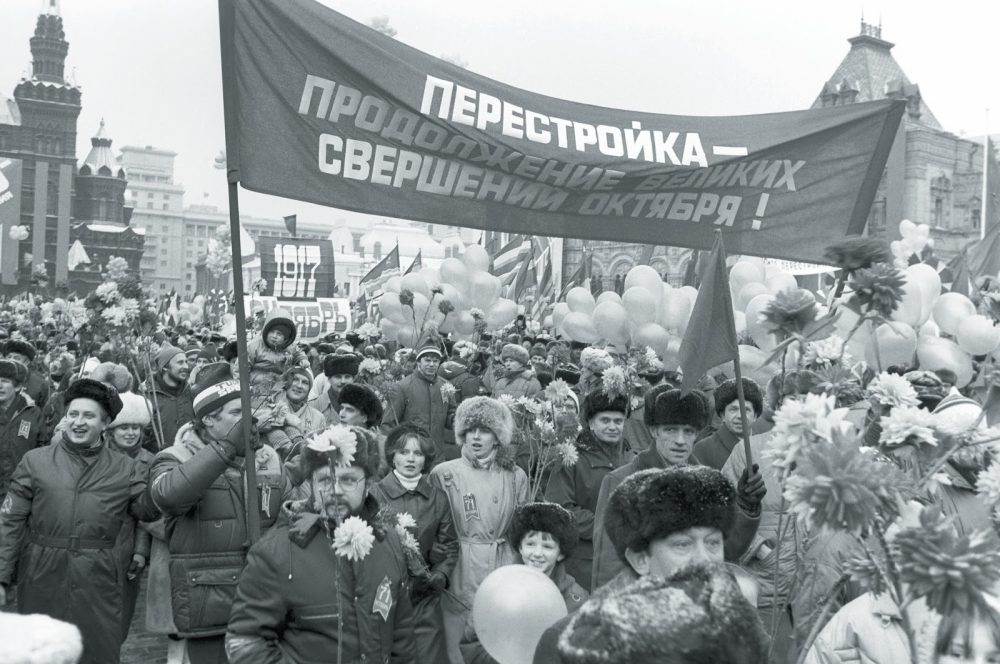
The October Revolution took place on 7–8 November 1917 (25–26 October, Old Style). Red Guards deposed the Provisional Government with almost no resistance. The Congress of Soviets proclaimed the transfer of power to the Soviets and elected Lenin head of the new government — the Council of People's Commissars.
The first decrees and the dissolved assembly
On coming to power, Lenin's government immediately passed a Decree on Peace and a Decree on Land, nationalized the banks and large industry, and abolished private ownership of land.
But the Bolsheviks held on to power by force. In the elections to the Constituent Assembly (late 1917) they won only about a quarter of the vote, losing to the Socialist-Revolutionaries. When the assembly refused to submit in January 1918, Lenin dissolved it the very next day. In March 1918 Soviet Russia left the world war by signing the harsh Treaty of Brest-Litovsk with Germany, and the party was renamed communist.
Civil war and the Red Terror
The Bolshevik seizure of power led to the Civil War (1918–1921): the "Reds" against the "Whites," who were supported by foreign interventionists. The Red Army, organized by Trotsky, won in the end.
These years were terrible. As early as late 1917 a secret police — the Cheka — was created. After an assassination attempt on Lenin in 1918, the Red Terror unfolded: tens of thousands of people were shot or thrown into prison. In July 1918 the former Tsar Nicholas II was executed together with his family.
The economy meanwhile was run under the policy of "war communism": nationalization, the forced seizure of grain from the peasants, attempts to abolish money and trade. The result was economic collapse and the famine of 1921, which claimed, by estimates, about 5 million lives. Peasant revolts and even a mutiny of the sailors at Kronstadt (1921) demanding freedoms were brutally suppressed.
The NEP: a retreat
By 1921 it was clear that things could not go on this way. Lenin made a retreat and introduced the New Economic Policy (NEP). It brought back elements of the market: peasants were allowed to sell their produce (subject to tax), small private trade and small enterprises were permitted, while large industry and the banks remained with the state. Lenin himself called this "state capitalism"; some Bolsheviks saw the NEP as a betrayal of their ideals. It was a temporary respite to raise up a ruined country.
The birth of the USSR
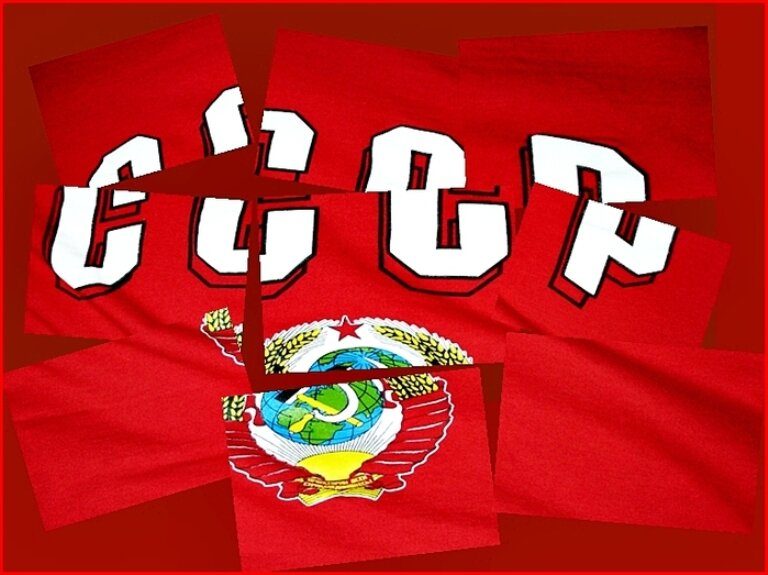
In December 1922 several Soviet republics united into a single state — the Union of Soviet Socialist Republics. So the USSR appeared on the world map, with Lenin at its source.
Illness, the "Testament" and death
Lenin's health deteriorated sharply. In 1922–1923 he suffered a series of strokes that gradually deprived him of the ability to work; one suggested cause was the bullets left in his body after the 1918 assassination attempt. Withdrawing from affairs, Lenin had time to survey with concern what he had built — and much of it did not please him.
In late 1922 and early 1923 he dictated the so-called "Testament" — notes assessing his comrades. In it Lenin warned that Stalin, who had become General Secretary, had too much power concentrated in his hands, called him too rude, and explicitly proposed removing him from that post. But after Lenin's death the "Testament" was suppressed, and Stalin kept his position.
Lenin died on 21 January 1924 at Gorki near Moscow, at the age of 53. His death opened a struggle for power between Stalin and Trotsky — from which Stalin emerged the victor.
The mausoleum and the cult
Against the objections of his widow, Krupskaya, and, by many accounts, against Lenin's own wishes, his body was embalmed and put on public display in the Mausoleum on Red Square. A veritable cult was built around Lenin's name: his image was everywhere — from monuments to school primers.
Lenin's body remains in the Mausoleum to this day. Whether it is finally time to bury it is still debated in Russia, but no decision has been reached.
Leninism
Lenin did not only make a revolution — he left a doctrine. His additions to Marxism (the idea of a disciplined vanguard party, the theory of imperialism, the "dictatorship of the proletariat") were later called Leninism. Combined with Marx's ideas, it became "Marxism-Leninism" — the official ideology of the USSR, later taken up by communist movements around the world.
A contested legacy
Assessments of Lenin diverge sharply — and we honestly show both sides.
Supporters and some historians see him as the man who did away with the old order: he gave the peasants land, proclaimed the first socialist state, took up mass literacy, and expanded education, healthcare and women's rights.
Critics point to something else: it was precisely under Lenin that a secret police and the Red Terror appeared, that the elected Constituent Assembly was dissolved, that other parties, revolts and the church were suppressed, and that the country was turned into a one-party dictatorship.
A separate great debate concerns the link between Lenin and Stalin. Some hold that Stalin's terror grew directly out of the system Lenin created. Others object: Lenin, unlike Stalin, would not have gone in for forced collectivization, for example, and the NEP pointed to a different, gentler path. We do not choose one verdict for the reader — but we also do not hide that at the source of the new state stood not only ideals but violence.
Frequently asked questions
What was Lenin's real name? Vladimir Ilyich Ulyanov. "Lenin" was a revolutionary pseudonym adopted around 1901.
What did Lenin do? He founded the Bolshevik Party, led the October Revolution of 1917 and became the first head of the Soviet state, which gave rise to the USSR.
Are Lenin and Stalin the same thing? No. Lenin created the state and was its first leader; Stalin came to power after his death. Moreover, in his "Testament" Lenin proposed removing Stalin.
Why is Lenin's body in a mausoleum? After his death the body was embalmed and put on display in the Mausoleum on Red Square (on the authorities' initiative, against his widow's objections). It remains there today.
Related
- The founding of the USSR (1922) — the state created under Lenin.
- Joseph Stalin — the successor Lenin asked to have removed.
- Five-Year Plans and the planned economy — Lenin's NEP was replaced by Stalin's centralized planning.
- The dissolution of the USSR (1991) — how the story of the state built under Lenin ended.
- The October Revolution of 1917 — the event that brought Lenin to power.
- The Siege of Leningrad — the ordeal of the city that bore his name.
Sources
The facts in this article can be verified against authoritative sources:
- Encyclopædia Britannica, "Vladimir Lenin": https://www.britannica.com/biography/Vladimir-Lenin
- Wikipedia, "Vladimir Lenin": https://en.wikipedia.org/wiki/Vladimir_Lenin
- Biography, "Vladimir Lenin": https://www.biography.com/political-figures/vladimir-lenin
- Encyclopedia.com, "Lenin, Vladimir (1870–1924)": https://www.encyclopedia.com/history/encyclopedias-almanacs-transcripts-and-maps/lenin-vladimir-1870-1924
- Hoover Institution, "Lenin's Death and Stalin's Schemes": https://www.hoover.org/research/lenins-death-and-stalins-schemes
- Encyclopædia Britannica, "Soviet Union: from the death of Lenin to the death of Stalin": https://www.britannica.com/place/Soviet-Union/The-U-S-S-R-from-the-death-of-Lenin-to-the-death-of-Stalin
- The Russian Revolution of 1917: a full overview — the context of the whole revolutionary year.
Where the data are contested (the number of victims of those years, the link between Leninism and Stalinism, the assessment of his legacy), we give different positions rather than a single one.